

The American Dream Doesn't Exist
The Gap Between What It Sells and What It Runs

INITIATING TRANSMISSION
AUTHOR: Arturious Castillo
ORIGIN: Queensbridge, Long Island City, Queens
CURRENT LOCATION: Tijuana, Baja California, MX
STATUS: Operational
CLASSIFICATION: SYSTEM AUDIT // AMERICAN DREAM
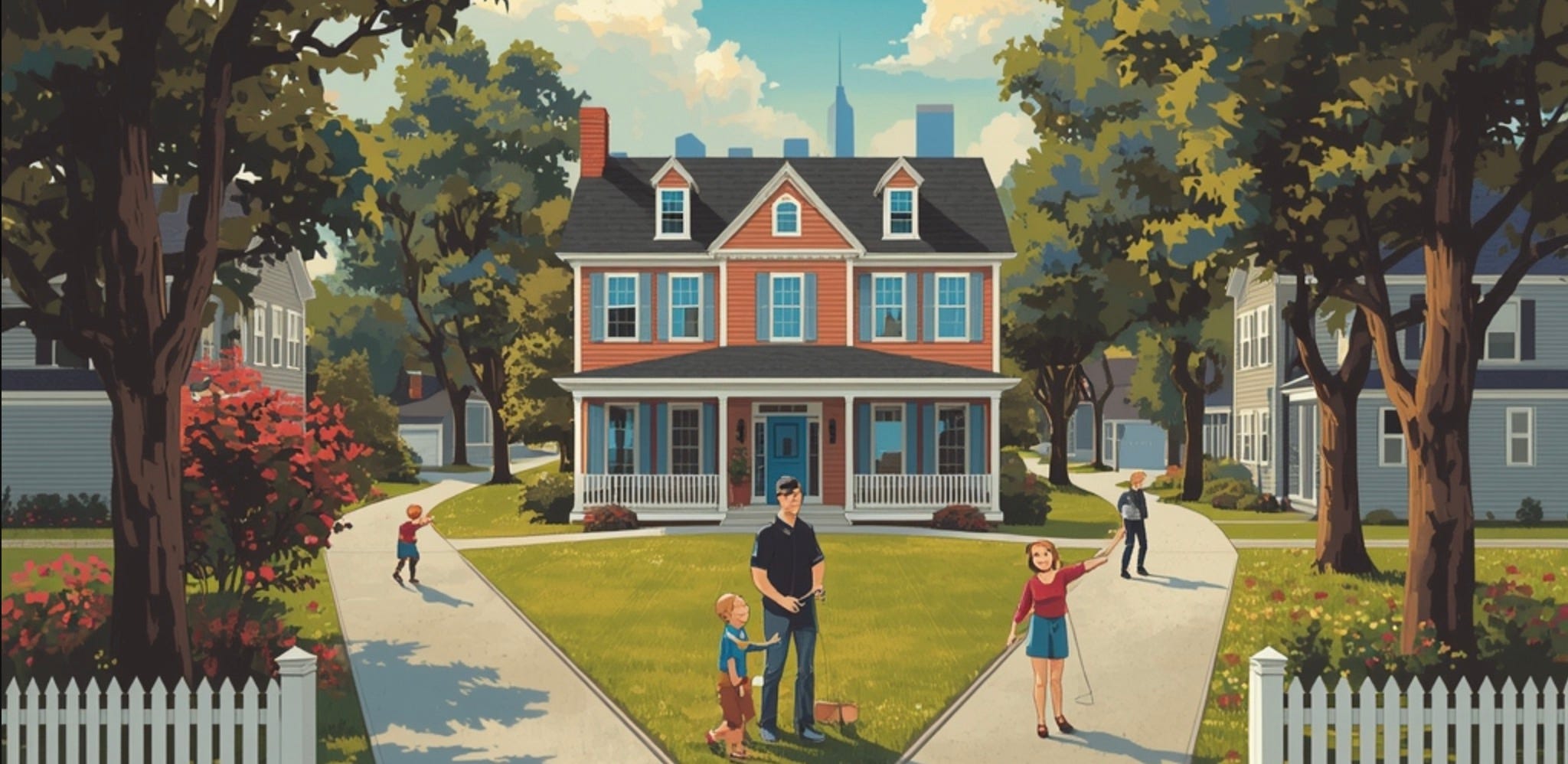
I almost envy people with normal lives.
Almost.
The operative word. Because when I sit with it long enough, I realize what I’m actually envying isn’t their life. It’s the comfort of a system that still holds them. Family nearby. A country that claims them. A marriage that exists in the same timezone. People who complain about problems that require the infrastructure to still be running.
My infrastructure is offline.
Three hours from my mother and a make-believe line says that’s where she stays. An ex-wife and son on the other side of another country. Kids who are closer in miles and further in everything else, for reasons I understand and won’t romanticize. Family that means everything in theory and operates as distant noise in practice, because presence is the only currency that keeps those connections liquid and I’ve been broke in that currency for years.
All of that is real. All of it is the cost.
And I’m free.
That’s the part that doesn’t make sense until it does. Freedom is what’s left when the system stops running and you’re still standing.
//SPEC_SHEET
The American Dream has a product description.
House. Car. Family. Upward mobility. Work hard enough and the system rewards you. Start with nothing and end with something. The contract is simple: compliance in exchange for stability.
It’s been the same pitch for eighty years. Same language. Same imagery. White picket fence, two kids, a dog, a lawn to mow on Sundays. The details update slightly for each generation. The promise stays identical.
Most people never read past the spec sheet.
//RUNTIME
The dream runs on debt, proximity, and the willingness to stay inside the lines.
The house requires a mortgage that takes thirty years to clear, assuming nothing breaks, assuming the market holds, assuming the job doesn’t disappear. The stability requires geographic compliance. You stay near the family, near the job, near the system that claims you. You don’t cross lines, literal or otherwise.
The upward mobility requires a starting position close enough to the ladder to reach the first rung. That’s not a moral judgment. It’s simply architecture.
The dream was designed for a specific user. Stable country of origin. Generational proximity. Access to credit. The right zip code at the right time.
For everyone else, the dream is still advertised at full price. The infrastructure just isn’t included.
I grew up adjacent to people running the dream’s operating system on hardware it was never designed for. Queensbridge to the Manhattan skyline is four miles. Four miles and a different planet. The skyline is visible from the projects. That’s marketing.
You can see exactly what you’re supposed to want from exactly the position that makes it hardest to get.
//ACCESS_CONTROL
There’s a border thirty minutes from where I sit.
It’s a line someone drew. Negotiated in rooms I wasn’t in, by people who died before I was born, for reasons that had nothing to do with my mother or my life or the distance between us. The line exists on paper. It exists in databases. It exists in the nervous systems of agents who enforce it.
My mother exists on the other side of it.
The American Dream sells freedom as a destination. Cross the line, get in the system, work the program. Freedom is what you earn after enough compliance. It’s the finish line, not the starting condition.
That framing requires the line to mean something. It requires the geography to be sacred. It requires the system’s boundaries to be legitimate.
They’re not. They’re administrative. They’re a product of a specific political moment that calcified into law that calcified into enforcement that calcified into the separation of a son from his mother by three hours and a make-believe boundary.
The dream doesn’t account for this. The dream assumes you’re already inside the right lines.
//THE_BENEFICIARIES
I’m going to be precise here, I don’t do resentment.
The people inside the system, the ones with the house and the proximity and the marriage in the same timezone, they’re not wrong for having it. The system working for you doesn’t make you a villain. It makes you a beneficiary.
What it does is make the system invisible.
You can’t see water from inside it. The people who complain about their mortgage rate and their commute and the difficulty of finding good schools, they’re complaining from inside a system that’s holding them. The infrastructure is running. The complaints are real but they require the foundation to be intact.
I hear those complaints and I feel the gap.
The gap between a problem that requires the system to still be functioning and a problem that exists because the system already removed you from its parameters.
That gap is where the dream lives. In the space between the advertised version and the operational reality.
//AUDIT
The American Dream is a retention system.
Its primary function is to keep people inside acceptable parameters by making those parameters feel like personal achievement. You didn’t just comply with the geographic, financial, and social requirements of the system. You built something. You earned it.
The dream converts structural compliance into personal identity.
That’s the architecture. It’s also why it works. That’s why people defend it even when it’s actively not working for them. Because to question the dream is to question the identity built around pursuing it.
The system deallocates the people it can’t classify. The undocumented. The displaced. The ones born on the wrong side of the line or the wrong side of the economy. It removes them from the parameters and continues running.
It doesn’t hate them. It doesn’t punish them. It just routes them out of the system and calls it a result of their own choices.
That’s the horror of it. A system that fails you without malice is harder to fight than one that hates you. You can argue with hatred. You can’t argue with a process that simply classifies you as outside acceptable parameters and moves on.
The dream exists. It’s just not what they advertised. It’s a machine that runs on compliance and produces stability for the people it was designed to hold, and produces the appearance of failure for everyone it wasn’t.
SYSTEM_LOG: AMERICAN_DREAM
UNIT_TYPE: Retention system
PRIMARY_FUNCTION: Convert structural compliance into personal identity
CLASSIFIED_OUT: Undocumented. Displaced. Wrong zip code. Wrong side of the line.
SYSTEM_RESPONSE: Routed out of parameters
OFFICIAL_DESIGNATION: Personal failure
SYSTEM_AFFECT: None. Still running.
//FINALIZING
I almost envy people with normal lives.
Then I remember what normal costs.
The proximity requires staying. The stability requires compliance. The dream requires believing the lines are real, the parameters are fair and the system is worth building your identity around.
I lost all of that. The country, the proximity, the marriage in the same timezone, the kids nearby, the family orbit that means something because you’re physically inside it.
What’s left is the thing the system can’t manufacture and can’t remove.
The ability to see it clearly.
You don’t get that from inside the dream. You get it from the position I didn’t choose and wouldn’t wish on anyone. The edge. The outside. The wrong side of the make-believe line.
I wake up and a lot of it still hurts. The distance is real. The loss is real. The cost was real.
And I’m free.
Manual mode. No backup. No support.
Still running.
//END OF TRANSMISSION
it’s so easy for some to put blinders on to societies oppression! Great writing!
This one is astonishing. I can never get enough of your writing. And it's true—much easier to have someone else do the thinking for you and follow instructions than deal with the cost of freedom.