

How A Transmission Gets Built
Not A Car. AI As My Sparring Partner.

INITIATING_TRANSMISSION
AUTHOR: Profit
ORIGIN: Saturn Retrograde
CURRENT_LOCATION: Tijuana, Baja California, MX, Earth-473B
STATUS: Operational
CLASSIFICATION: SYSTEM_AUDIT // THE_MACHINE // HOW_A_TRANSMISSION_GETS_BUILT
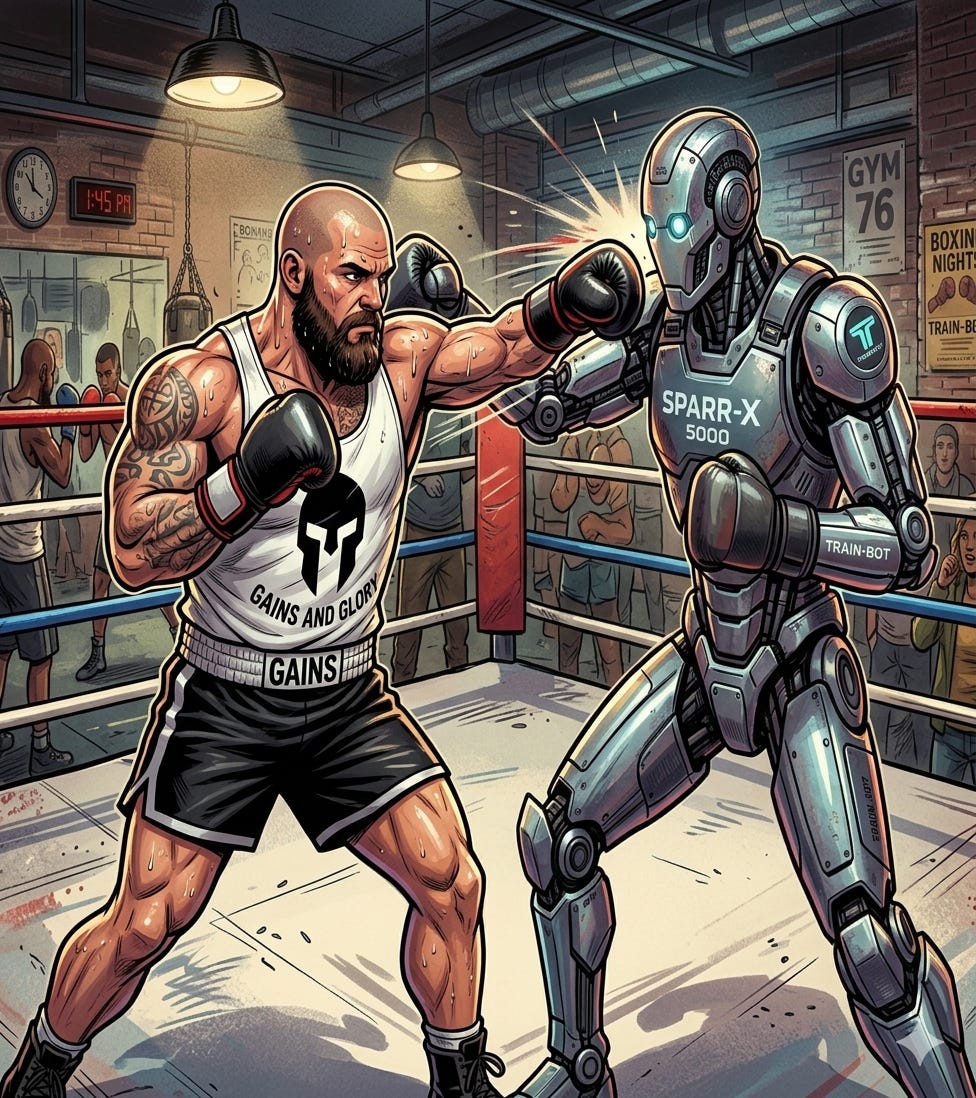
Everyone’s got an opinion on AI right now.
The optimists say it’s the great equalizer. The purists say it’s killing everything worth making. The LinkedIn crowd is somewhere in the middle posting about prompt engineering like it’s a personality trait. All three camps are arguing about the tool and completely missing the hand holding it.
I don’t use AI to write for me.
I use it to audit me.
This also doesn’t apply to other areas, like creating videos or art with AI. This is only about writing with AI.
Anyway, the audit makes all the difference. That’s my architecture. Since most people using these models to write are either outsourcing their thinking or performing like they aren’t, I figured I’d show you exactly how a transmission actually gets built around here.
I don’t want credit for the methodology. But if you’re a writer and you’re not using the machine this way, you’re leaving the best version of your work on the table.
//THE_PRIMARY_DUMP
It starts with me. Almost always. It’s rare, but I have used outlines before, drafted by me.
I sit down with an idea or a topic, open my MacPuter, and I start typing. If research is required then the research tab stays open on the side. Just me and whatever’s been living in my head, the lived data, the mythology, the observations that’ve been building pressure since the last time I sat down to write, coming out through my hands directly into notes.
Fast. No outline. No looking back until it’s done.
That’s the first draft, the hardware. The stuff that exists nowhere else because it happened to one specific person who isn’t you and isn’t the machine.
//THE_SHADOW_BUILD
This is where I use AI. No, not Allen Iverson.
I use a custom AI built on Claude 4.6 Sonnet. The system prompt explains who I want it to be, my favorite tech stack, some exaples of how it speaks, and a very detailed story of how I grew up. This is what influences everything.
I don’t show the AI my draft. Not a fuckin word of it. I give it the concept. The intent. The architecture of the idea in clean technical terms. The same starting point and ideas I had before I began writing. Then I tell it to build its own version from scratch without knowing mine exists.
I want to see the generic path. To see what standard logic produces when it gets handed the same premise I’m working with. Despite custom instructions, an identity, and deeper personalization, It’s still somewhat generic.
Now if the machine builds something that looks similar to my first draft, my first draft is running on default settings, I trash that shit. Because It’s the version anyone with a laptop and a Wi-Fi connection could’ve produced. That’s useful information. That’s the test showing me I need to go deeper.
The machine is fast. Consistent. Tireless. It’ll hand me the scaffolding in thirty seconds.
That’s exactly why I want it.
//THE_ABSORPTION
Now I’ve got two papers.
I read mine several times. I read the machine’s several times. Then I close both of them.
No side by side comparison. No extraction. No blueprint over skeleton. I just let both versions live in my head and settle until whatever survived the read is what’s left. The machine’s structural move that I missed. The thing I had that it couldn’t get anywhere near. The place where both versions went soft and the real answer lives somewhere neither of us found yet. I would say it’s about 80% me and 20% AI.
All of that just parlays there.
Then I open a blank page.
//THE_FINAL_TRANSMISSION
I write the whole thing from scratch. From memory. From whatever the absorption left behind.
Fast. Straight into the SubSmacks editor. No documents open. No referencing back.
When I finish I skim it once, hit publish, and let the chips fall where they may. The typos that make it through are just what happens when a fast typist doesn’t proofread and doesn’t apologize for it. You will never see me edit or fix anything once it’s published, except for the Novel.
Sometimes, once it’s posted, I might read it, most times I don’t.
Worth mentioning, if I’m doing an audit or a rewrite of someone else’s work, I only use AI for cross referencing or run searches to validate something.
//THE_REAL_QUESTION
I’m pro AI. I build AI systems, I add AI to all of my custom built apps. AI has allowed me to code shit that would’ve taken me months in one or two weeks.
Everyone asking whether AI is good or bad for creativity is asking the wrong question.
The right question is who has the final word.
You let the machine close the transmission, you’re just another node in the pipeline. Producing content that sounds like content. Safe, clean, optimized, and completely replaceable by the next version of the same tool that built it. If you’re ok with that, then it’s ok with me.
I use it to stress test my own architecture and then build the final thing myself, that’s my operation entirely. It’s what they do when they write a book. You think the author wrote it, edited it, restructured it, all by themselves?
The machine finds the gaps.
I fill them.
That’s the whole methodology. The machine is the sparring partner. I’m the boxer.
I don’t want it to speak for me.
I want it to show me exactly where I need to speak louder.
This doesn’t apply to any areas of AI that isn’t writing. As I said above.
That being said, like I have said, time and time again: I don’t care who uses AI to do what. If I read something that genuinely cathces my attention, I don’t care if your cousin Judy wrote that shit. If I like it, then it’s fine by me.
SYSTEM_LOG: THE_NEURAL_SPARRING_PARTNER
STAGE_01: Raw dump. No machine. Hardware only.
STAGE_02: Shadow build. Machine gets the concept. Never the draft.
STAGE_03: Absorption. Read both. Close both. Let it settle.
STAGE_04: Final transmission. Blank page. Memory only. Hit publish.
THE_MACHINE: Finds the gaps. Profit fills them.
FINAL_WORD: Always mine.
STATUS: Operational.
JUDY: She's your cousin.
//END OF TRANSMISSION
Profit.
This is really interesting. I have been known to do something similar, but stopped a step short of your model. I will write an article (or report or document for work) and then, once it is done, I will ask AI to write something on the same topic - just to see if it comes up with any points or gaps that I have missed. Like you, I don't give AI access to my version to avoid influencing it. The few times I have done this, it has not thrown up anything that I hadn't already covered myself, and this gives me reassurance and a bizarre sort of robot-generated validation.
On the times that I have used AI before starting my own writing, I have lost my own voice and have not been able to go back to a point where the writing sounds like me. It just doesn't work for me.
I may well give your version a go and see how that works for me.
Hell yeah! That's an interesting process. I like it. Don't let it do the thinking for you. Retain that for yourself. Have it find gaps and holes that need to be plugged and strengthen the story or Article. That's part of how I have used Claude as well beside Prose generation based on my synopsis. I have had it run developmental edits to help me Identify and explain what's wrong and some possible fixes. Then I take that and read the sections it has highlighted and tweak things on based on my thinking.